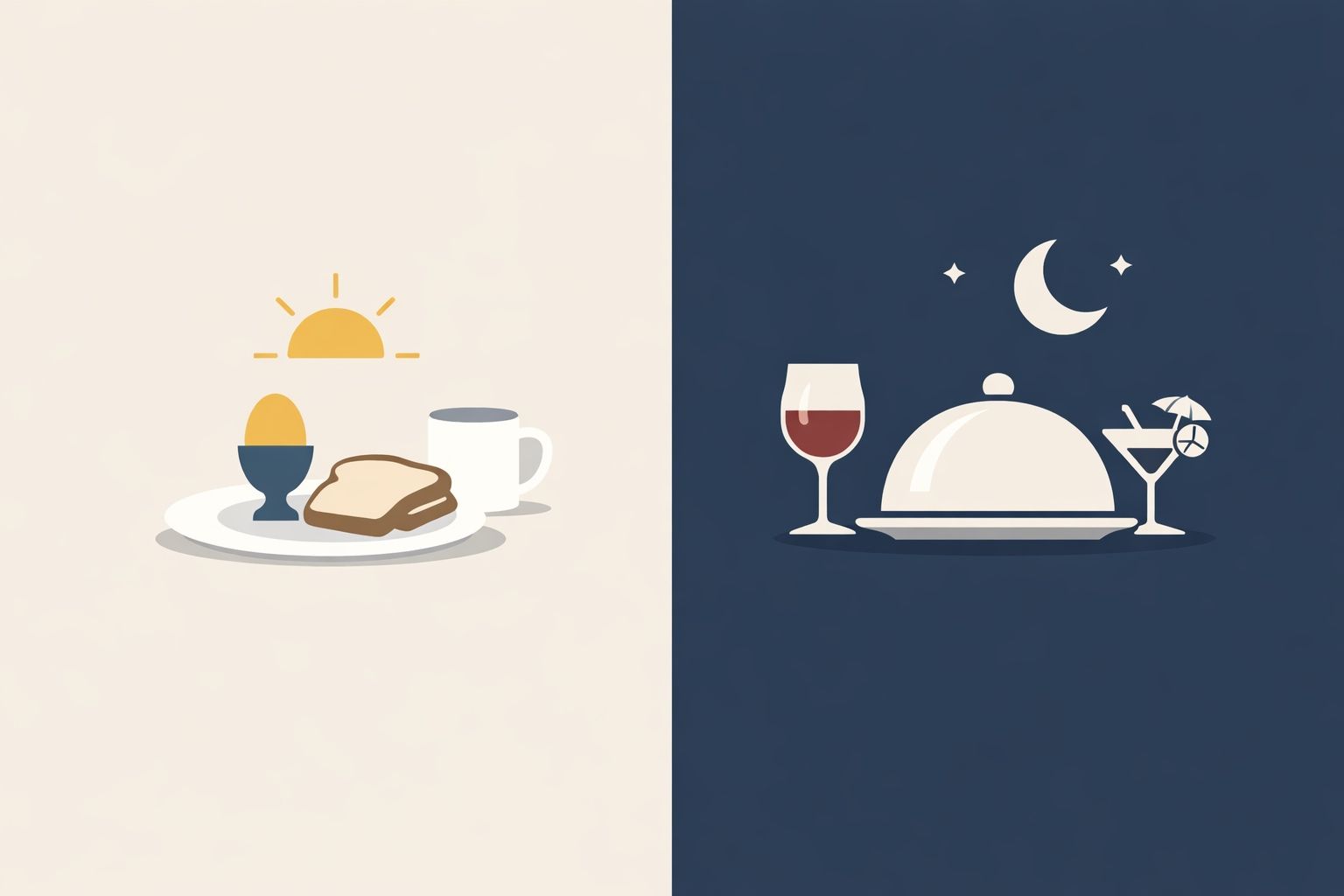
This asymmetry is a great example of how context shapes preference at a fundamental “intent” level.
Wansink and colleagues showed that breakfast and dinner are governed by fundamentally different goal frames. One is #functional, the other is #hedonic. When a meal’s job is to fuel #cognition, predictability is the rational choice. When its job is to deliver pleasure, repetition registers as failure.
Baumeister’s work on ego depletion (1998), extended by Levav et al. (2011), adds another layer: We conserve decision-making resources in the morning by running breakfast on autopilot. By evening, after a full day of self-regulation, #novelty becomes restorative rather than costly.
Ratner, Kahn and Kahneman (Journal of Consumer Research, 1999) brought it together: variety-seeking scales with the perceived “specialness” of the consumption #occasion. The more a meal matters, the higher the bar for something new.
The implication for consumer research is significant. Preference is not a stable trait. It is a context-dependent state. A taste profile measured at 9am will systematically underpredict variety-seeking at 7pm.
This is the kind of insights / trainings we are building into Digial Twins in TasteNET Simulator. Static consumer profile are not enough, it’s a dynamic “contour” lines shaped by the elevation of time / mood of the day context.