My wife loves strawberries but not the seeds. She loves Sichuan food but not the numbing from the peppercorn. She enjoys the body vs. stone fruit aroma balance of a barrel-aged Chardonnay but not the yeasty, buttery notes.
Liking is never complete. We are used to 40~80% approval of most things we eat daily.
Loving a food is like loving a person. You accept what draws you in, and you learn to live with what does not. If you try to remove every flaw, the whole system collapses. The #balance and #tension is part of the deal.
In 1971, psychologists Brickman and Campbell described the hedonic treadmill: no matter how much we gain, we adapt to the new level and return to baseline. Then we chase the next thing. The pursuit of #satisfaction is structurally #endless.
French psychoanalyst Jacques Lacan made the point more fundamental: #Desire, he argued, is never about the #object. It is about the #lack. We do not want the #thing we pursue. We want the #wanting. The moment we obtain it, desire migrates elsewhere.
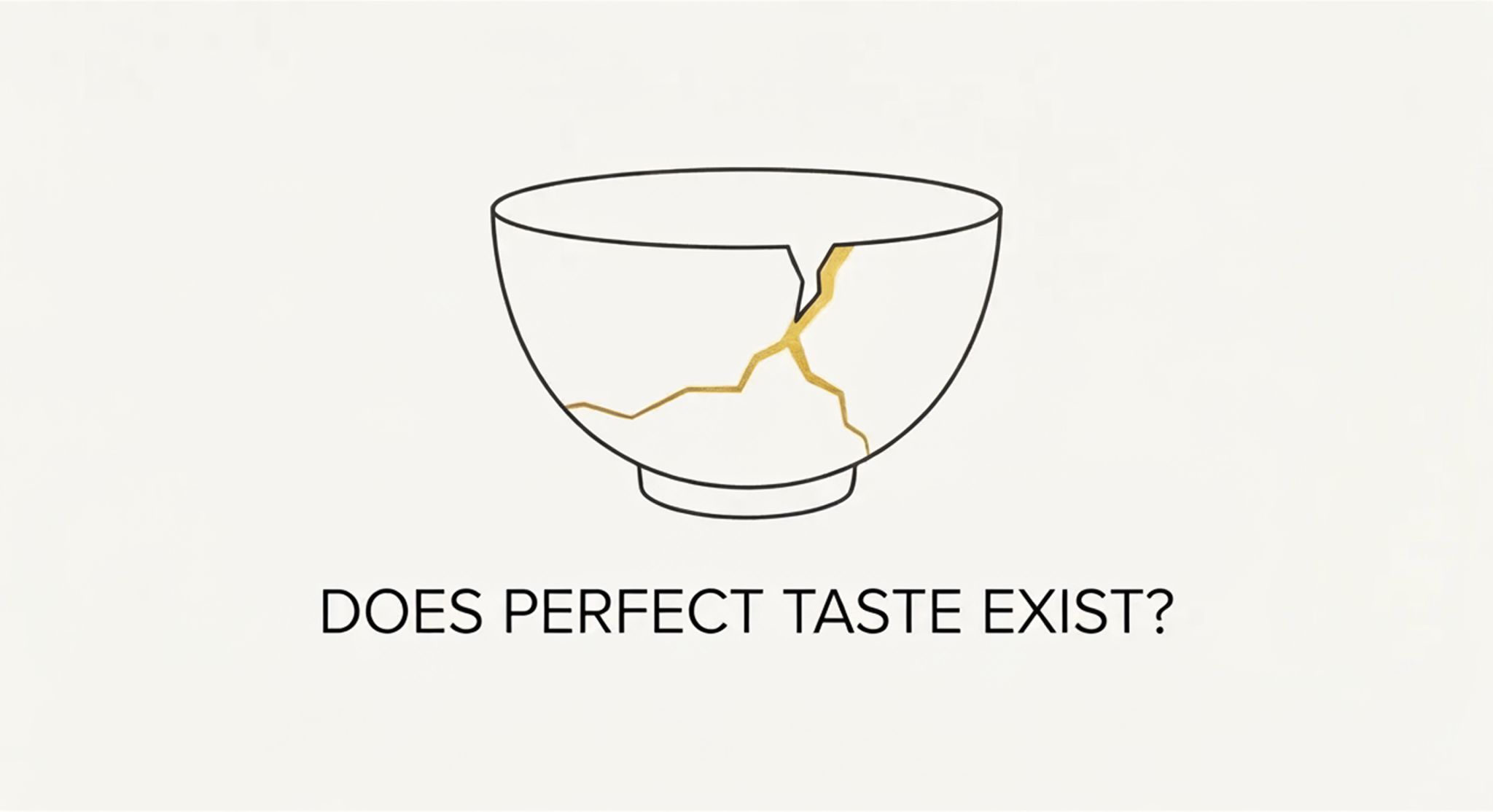
In Japanese culture, there is a concept called #Kintsugi: Broken pottery is repaired with gold. The crack is not #hidden. It is #highlighted. The flaw becomes the most beautiful part of the object. The #imperfection is not a failure of the craft. It is the #story.
I guess it is time to take a pause and rethink many of the problem statements driving innovation in the modern food system. Are we chasing solutions to #delusional problems? Or is it about #recalibrating our collective expectation?
And in the future food system, should we keep chasing "The perfect taste"? Or should we learn to see the "gold in the crack"?