our methodology
Built on first-principle of
psychophysics and thermodynamics
TasteNET decodes the human-food relationship by applying first-principles methods across its system design.
01
Sourcing

We designed and built our own consumer-facing data pipeline around the 16 Taste Types, the 8 Foodie Personalities, and the Food Memory Interview, collecting structured first-party sensory data at scale to train our AI consumers. Gamified incentives, community engagement, and IP-driven avatars let users discover and own their foodie profiles while contributing high-quality, self-reported data. Every report is delivered back to the user, and all data is collected with explicit consent and handled in a privacy-first environment for compliance and trust.
02
Modeling
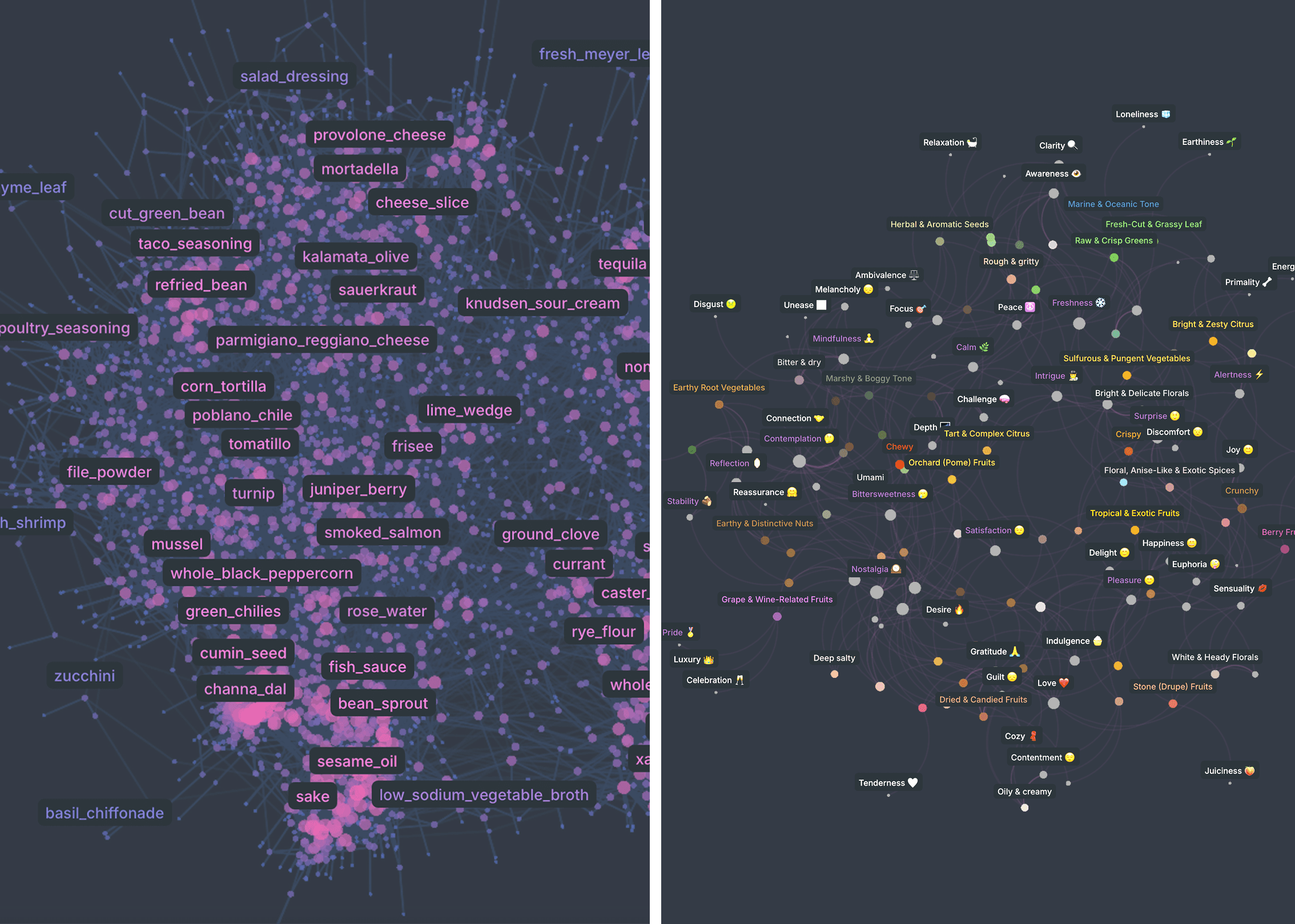
Grounded in ontology-guided psychophysics and aligned with food industry ISO and ROI metrics, we developed proprietary Sensory Power Indices to quantify how individuals and populations perceive taste, through both JAR peak-value analysis and emotion-state mapping. Before predicting acceptance, we measure intensity and preference curves for every key sensory and behavioural attribute. The process is fully numerical, comparable across cohorts, and ready for reporting.
03
Insights

Insights distil high-quality sensory data and external context into decision-ready guidance. We map cohort and regional sensory identity, quantify acceptance, isolate drivers and barriers, measure momentum, and translate evidence into clear actions for localisation, reformulation, claims, and portfolio moves. Reporting is customisable, privacy-first, and comparable across markets, built to give GTM and brand teams confidence.
Example insights
Assess market-entry risk for a current formulation in Bangkok versus Tokyo with acceptance forecasts and localisation ranges
Select the winning flavour route for a sparkling citrus RTD with JAR and intensity targets by cohort
Test claim and naming options for a reduced-sugar yogurt among UK families with predicted lift
Benchmark a chili sauce against category leaders in Mexico City to set spiciness thresholds and messaging guidance
04
Intelligence
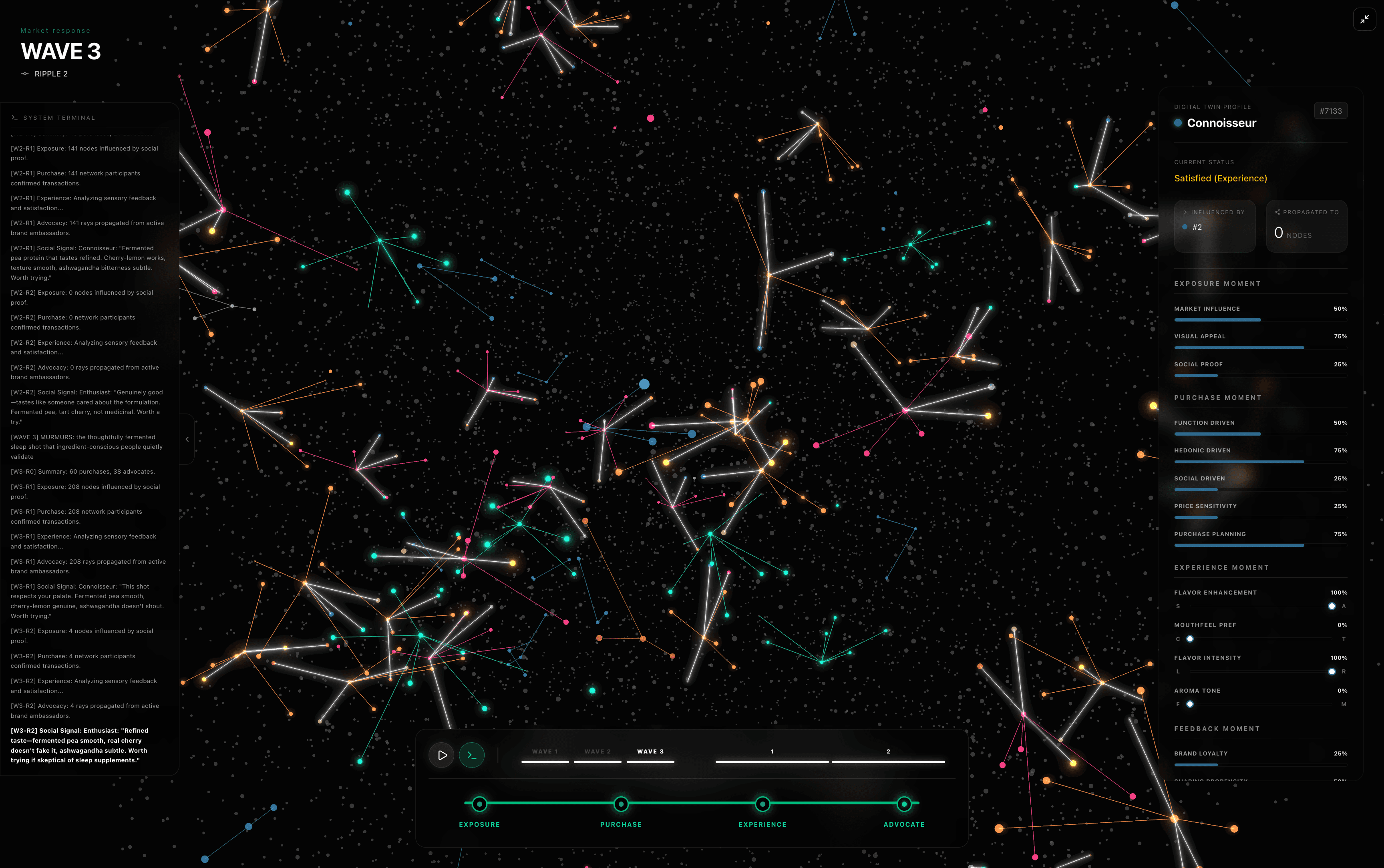
AI Consumers in the TasteNET Simulator are trained on proprietary first-party sensory and behavioural data, grounded in real consumer psychology and live market context.
Only bottom-up simulation at the individual level, preserving each consumer's full-dimensional taste preferences and state-dependent responses, lets brands move beyond averaged metrics to evidence-backed decisions: what to launch, how to position it, and who will actually buy it.
How do we know it works?
TasteNET is validated against 20 industry-standard benchmarks across the Exposure, Purchase, Experience, and Advocacy (EPXA) stages, each grounded in peer-reviewed methodology.
Dual-axis benchmarking
Every simulation is scored on two axes: completeness, the breadth of decision factors captured, and accuracy, the fidelity of outputs against ground-truth consumer behaviour. No synthetic data. No averaged personas.
Free from self-report bias
AI Consumers do not modify responses to appear more health-conscious or less price-sensitive. On barrier identification and purchase hesitation, this is a structural advantage over traditional survey methods.
